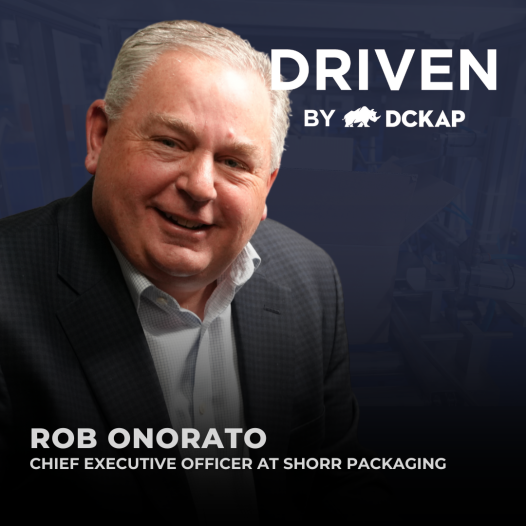
Rob shares the secret behind his first-year strategy with the company: asking questions and listening to customers, reps, and employees. After taking on the role of CEO, he navigated a cyber attack within days, followed by a multi-million dollar failed experiment—proving why “think big, start small, move fast” isn’t just a mantra, but a proven framework for scaling distribution businesses.
Rob offers unique insights on building high-performance teams by recruiting top distribution talent from outside the packaging industry, creating an ESOP culture that drives employee ownership and accountability, and why their “feet on the street” approach prioritizes customer relationships over transactional sales. Tune in to a conversation that offers practical lessons on scaling businesses, building high-performance teams, navigating crises, and turning expensive mistakes into sustainable growth strategies.
OR LISTEN ON:
Karthik Chidambaram: Rob, thank you so much for doing this and great to see
you.
Rob Onorato: Oh, thank you for having me.
Karthik Chidambaram: So Rob, the story of Shorr packaging is very
interesting, and especially the work you are doing there is even more
exciting.
So when you started with Shorr, or maybe for the audience out there, you
know, who are not very familiar with Shorr, can you tell us, what does Shorr
packaging do?
Rob Onorato: Shorr Packaging is a national packaging distributor, so we work
with best in class manufacturers of corrugated boxes void fill protective
packaging, cold chain products, sustainable products.
And we just bring all those products to solutions for customers.
Karthik Chidambaram: And when you started with them- I was just reading
about this and we also had a conversation, right? So you guys were doing
about $450 million in revenue and then you guys in about four, five years,
you are doing over a billion dollars.
Rob Onorato: Yeah, so, the story I like to tell is the first 90 years, so
Shorr’s 103 years old now. So you know, it started way back and so the first
90 years the business went to about $180 million kind of a regional
supplier. Then the second phase of growth was really when we began to follow
customers.
So if a customer said, I'm doing work in Chicago, can you help me in
Atlanta, we would start migrating based on current customers, and that took
us to about $490-500 million. I came in 2020. We just took a, you know, a
bit more aggressive approach and started talking to more and more customers
and through expansion and last year round numbers, we just hit a billion
dollars.
So we are very, very pleased with the results and yeah, we've got a lot of
satisfied customers.
Karthik Chidambaram: And how do you do that? Right? Because this is the
question a lot of distributors would have, or even a lot of CEOs would have.
So you become the CEO of Shorr, and you have a team, you have things that
are working great.
Rob Onorato: Yeah.
Karthik Chidambaram: And also there are things, you know, where you need to
do better and in about four or five years, you know, you kind of double the
revenue.
Rob Onorato: Yeah.
Karthik Chidambaram: So we talked about the feed on the street approach,
right? So how do you actually do that? How do you make it happen?
Rob Onorato: Well, I tell you, the board of directors of the company, when
they did the CEO search.
They brought me in as president for the first year, and it was a wonderful
experience. The board said, go see what you have. I mean, what are our
customers like, what are our reps like? What are the employees like? And
we're an ESOP, so we're a hundred percent owned by employees. So, you know,
get a good feel for that.
And then when we had the plan transition when the past CEO retired the board
said, Hey, take what you've learned and build out your team. Build out the
next team that you need for growth. We were very fortunate to bring in some
I think some very talented people in the distribution space.
Not so much for packaging though, right? Just really looking at other
distribution organizations. So from our COO, our CIO, our head of HR, I
mean, we just kind of scanned the globe and found the best distribution
executives and we built the team from there. Then from the sales force,
we've got about 95 sales reps today that handle the country.
And then we are very specific with customers. So very deliberate on the kind
of solutions that we bring. So in addition to our 95 sales reps, we have 45
to 50 project managers, and we have a big suite of customer service rep. So
we bring all that together to make sure we're doing the right thing for the
customer.
Karthik Chidambaram: And for each of the large accounts you have a team in
place and they execute. Is that how it works?
Rob Onorato: Yes. Yeah. Yeah. So we have an account manager, account
executive would work with a customer, understand what we're trying to get
accomplished and then we would. That account executive with, others in
supply chain would then go out and talk to all the manufacturers and
determine what is the best solution set from a product side.
And then we'd bring that, we'd bring that to the customer. And once we
contracted with that, then we would put a team of customer service reps on
it, project managers, just to make sure the day-to-day side of the business
is doing exactly what we had what, what we had committed to.
Karthik Chidambaram: During your first year in the company, so you said, you
know, you go visit customers.
What typically happens, right? So you're mostly traveling on the road a lot.
Is that how it works? And then what do you do, you know, when you go to the
customer location?
Rob Onorato: You know, I mean, it, it's, it's, it's so funny. Like my hope
has, and, and I don't mean any disrespect to the consultants out in the
world 'cause they're wonderful consultants, but my approach has been you,
you just ask, I mean, we just asked a lot of questions with customers and,
Hey, what do you like what we're doing today?
If you think down the road, what should we be doing different to help you
get to your next step? Are there things that we're not doing today that
maybe we should be thinking about for you? And so really, I mean, I had a, a
notebook for the first, oh God, first six months. It was just filled with
customer comments and feedback.
And then, then we'd come back and we put the team together and say, are we
seeing any common themes? Are there, are there parts of the business that
maybe we've taken for granted or we've neglected. Then we would just, you
know, we put our heads together and figure out how to improve it.
Karthik Chidambaram: And things always don't go as planned because when you
took over as a CEO.
There was a big cyber attack.
Rob Onorato: Yes. Yes. There was. Yes, there was. Matter of fact, I think
it's I think the, an the four year anniversary is next Monday, so Yeah.
Yeah. That was a tough day. Yeah. I had just taken over and I had it's
funny, we had our new chief Human Resource officer was starting, like
literally that day.
We had an eight o'clock meeting and and I got into the office and we
typically get daily reports on, you know, just what we build and they, they
weren't showing up. And so I grabbed the then director of of it and said,
Hey is a network down. And he said, well, well look, let me dig into it. And
then I got a text.
From a from the bad actor and they said, Hey, we, we have control of your
system. And so I grabbed him and said, here's the problem. And yeah, we went
into complete, just, you know, I don't wanna say Yeah, yeah. It was right.
Like it was an unplanned event, right. So we got everybody together. We, we
did the right things.
We contacted our insurance people. They sent a team of forensic folks out
and, but yeah, it was it was a crazy day. And it went on for for about a
week. We went into manual process. So we were taking orders like literally
on sheets of paper. We contacted all of our top customers. Our email system
was still up.
So, so that part was safe. And we contacted our suppliers, our customers
told 'em exactly what was happening and then just went to work.
Karthik Chidambaram: And how did they react, right? Because obviously when
you guys have a cyber attack. It hurts your customers as well, you know, so
how do they react?
Rob Onorato: I mean, they were, they understood.
I mean, that was going on, that was becoming very, very big. Right? I mean,
any, anything that you'd read in the journal or any, you know local business
periodicals, there was a lot of that activity and so they understood it and
they were super supportive, but what we said to them is, we're not gonna let
you down.
So for our products, I mean, if you're a manufacturing company. You need our
products to ship your pro, your end product to your customer. Like we can't
have them down. I mean, that's very important. So we just got to work with
the local teams and said, go into manual mode. And that's what we did until
we rebuilt our systems.
Karthik Chidambaram: So Rob, Shorr is 100% employee owned and I was also
talking to Tammy Miller. Right. So she's a big advocate for being employee
owned. How does that impact your culture?
Rob Onorato: It is our culture. So, I mean, keep in mind that, 100% of all
stock for the company is owned by the employees. And you know, that's a very
powerful thing.
So in 1984 Shorr the employees took a minority stake in the company, and
then in 2012, the, the employees bought the whole company from, from the
Shorr family. So literally. Every single person who works there has stock in
the company. And the way that works for people who, who you know aren't
familiar with ESOPs is once you've been an employee for six months, you're
eligible to become a shareholder.
And so the way that we monetize that is. Each year, our employees will get
their, you know, their salary, their, their wages, any type of bonus. And
then we as a company would do a, a contribution. So let's say you made a
hundred thousand dollars a year and our contribution was 10%. So then we
would give you $10,000 of Shorr stock.
So that happens. So each year we take x percent of your, your wages. And we
give you short stock, so you get that every year. But the beauty of it is
you also get all the appreciation, so when the company does well. So more
profits are generated, the higher the share price is, and then these
employee owners become it.
It's a wealth generation tool. And so how that helps us with customers,
'cause in my mind, I always think like, what does, what does a customer feel
from it? Well, when we, when we say we're gonna take care of a customer,
like customer first mentality is major, major, major for us. If we say we're
gonna take care of a customer and have these products in and do these
deliveries, everybody in the organization knows about it.
And so if you're driving the forklift in the warehouse, you care. You care
that that product gets on the truck on time to satisfy that customer. If
you're a customer service rep and that phone rings and that customer's got a
question like you're answering that immediately. So that, that is really
pervasive through the organization.
That was one of the first things that I saw when I got there. It's like,
wow, this is, I mean, you've got everybody rowing in the same direction and
taking care of customers. That that was, that is our culture.
Karthik Chidambaram: So talking about acquisitions or organic growth,
Rob Onorato: yes.
Karthik Chidambaram: You guys have cash and you could acquire new companies,
but you desire to do that organically?
Rob Onorato: Yeah. So you know, you know, we talked about earlier and we
just hit this, you know, billion dollar mark. We are debt free. I have an
unbelievable chief financial officer. He is phenomenal. But yeah, so we're
debt free. So we've looked at acquisitions hard, and here's what we struggle
with. If I bought a a hundred million dollars distributor.
It's gonna cost me roughly a hundred million dollars, I mean, ballpark,
right? Or I can invest $20 million and I can go take on a new adjacent
market, cold chain contract packaging. I could expand geographically, and so
for that $20 million, I can turn that into $250 million, but it may take me
a couple years to do.
And so yeah, that's, I mean, that's what we think there. I mean, we've had a
lot of success growing organically, green fielding, listening to customers
and you know, going back to that think big you know, start small, move fast.
I mean, we have really leveraged that. And again, we, as a distributor, cash
is not the issue.
It is just like, where's the best use of that? So far, you know, we just
haven't done acquisitions. Not saying that we won't, but right now we think
our growth has is a pretty compelling reason to say, you know, keep the
course
Karthik Chidambaram: and you invest in your team and you invest in your
people and it kind of compound.
Rob Onorato: Yeah, yeah, yeah, exactly. That's exactly right.
Karthik Chidambaram: How do you find a new initiatives to work on, right?
Like for instance the meat sticks in Costco. Yeah, the charms. Yeah. So
that's something you guys deliver, right? You package and you deliver. So
what typically goes around, you know, how do you get them as a customer?
Rob Onorato: That's a great story. We were called in to look at point
approaches, displays. The first part of the question was you know, Toho
packaging, can you design and build and, and, and ship point of purchase
display? And we said, oh, yeah, sure we can do that. What are we trying to
get accomplished?
And so our reps, I think, do a very nice job of really trying to understand
what's the end goal from the customer standpoint. And then we find that they
were they were awarded a big chunk of business with Costco. So, I mean,
they, yeah, you're right. They make meat sticks and so we said, well, listen
walk us through how you manage those.
And then we gave them another view and so they shipped their products to, to
one of our facilities. We sort 'em, we label 'em, we date stamp 'em, we do
all the, the lot traceability. We package 'em into whether it's 12 or 20 or
bags, and then we we work with them to manage the logistics with the Costco
team.
So yeah, it went from selling point approaches, displays to full scale. We
call it kitting and fulfillment or contract packaging. And yeah, they're a
great customer of ours and their business has, has been booming. We, we
spend a lot of time talking with them about where their forecasts look like.
We do joint audits on products, so it's, it's been a very collaborative
effort.
Karthik Chidambaram: And do you travel, meet with them as well?
Rob Onorato: I meet with them, they, they came into Chicago, so that's where
I spent most of my team. But yeah, I, you know, we've got a traditional
structure with our vice president of sales and regional vice presidents and,
and they've met with 'em.
Karthik Chidambaram: You started your career in sales, right? So I think you
went through about seven or eight interviews together, a sales job at Xerox
Rob Onorato: as Xox. I did, I did. Yeah. Boy, it's funny. So the fellow who
hired me, his name is George Urban. And he just retired from Xerox actually
about two years ago. And yeah, so I went through seven interviews with the
district managers and the sales managers and yeah, it was very intense
process.
And then I kept waiting for this offer and I, I had to go buy a car. This is
a crazy story, but I had to go buy a car and so I went to I was gonna buy a
used Honda Accord. And I talked to the guy and I said, yeah, that's the one
that I want. And my my now wife, we were prepare, we were getting ready to
be engaged.
I'm like, she had a great job. I'm like, oh God, I've gotta, I've gotta do
something here. So I went to buy this car and I'll never forget, there was a
guy named Tony who was the finance director, and he said, are you employed?
'cause I had to do the, the financial paperwork. I said yeah, because I felt
like I knew that it was coming.
Right, sure. And so he said, well, listen, I just need to call somebody just
to confirm employment. Now, I've tried to reach George over on the phone.
It's like, like 20 times. Like the guy was so busy. So my thought was, well,
listen you can confirm it with him and he'll just call you back. Instead
when the finance guy called George picked up the phone and and they said,
Hey, I've got Rob Rado here.
Just, just meaning just need to confirm that he's employed there. And I hear
this Boers laugh and, and he said, is he sitting right next to you? And the
guy gave me the phone. I said, Hey George, how you doing? And he said, Rob,
he goes, first of all, you're hired. And he said, that is the most creative
close I've ever seen.
And he's been a mentor of mine for the last 40 years. And we still laugh
about it. So yeah, it was a, it was a funny, it's, it was a funny, I forgot
that I told you that earlier. Yeah.
Karthik Chidambaram: And this sales skills kind of carried through your
career, right?
Rob Onorato: Yeah. I, I spent 10 years with Xerox and I, I think Xerox was,
I mean, they were the Marine Corps of sales process sales training sales
management and that kind of thing.
So yeah. So that was, you know, 10 years of that. And I would look back on
my career and that's helped me a tremendous amount because it does. When,
when I, when I look at Shorr, when we came into Shorr, you know, they just
had a record year of hitting, you know, close to $500 million. And, and what
you find is we had great salespeople, great manufacturers, so our supply
chain was good.
But I'd say a little bit light on the, the sales process and, and, and how
we track things and how we monitor. So that was one of the things that we
went to work early on is just blending in the culture of the company because
you don't wanna, I mean, the culture is, I think it's our biggest asset
there, but with training on, hey, this may be a better way to standardize
some of the things that we're doing.
How do we get more done with customers faster? And and that, that's really
where a lot of that came from
Karthik Chidambaram: for a college kid out there listening to this. What
advice would you give them? Right. Let's say if they're starting their
careers, just like how you did with
Rob Onorato: socks,
Karthik Chidambaram: you know?
Rob Onorato: Well, I, I tell you I'll just give like to them.
So I've, I've got four adult children and you know, they're all, they all
have great careers and, and what I said to them coming outta school is my
advice would be, go to work for a company that really has substantive
training. And, and really understand all the elements of business. So
whether, you know, I've got a, a son and a daughter who are both
consultants, right?
So that, that was my earlier shot. One was with Deloitte, one is with ERNs
and Young Consulting great firms. And I said, look, that they're gonna teach
you how to think at a different level. And then I've got a son who works for
Nestle's. He's on the sales side of it. And then I have a daughter who's a
marketing genius for Bath and Body Works.
And my point to them was go learn from a big company. Understand culture,
understand that means, and then when that time comes in your career, if you
want to do, go do something more entrepreneurial, then, then do it. But at
least you've got a great, you know, a great set of skills. So, so that's
what I told my kids.
So that's what I would, would suggest to others.
Karthik Chidambaram: And also, you know, when you are there, work hard,
expand boundaries. Just take up new things. Yeah,
Rob Onorato: yeah, exactly. I mean, it's, it just helps you think
differently. You know, one of the things that I kind of worry about with,
with newer people coming up is this whole work from home side of it.
I just look, I mean, we at, at Shorr, again, ESOP culture. We like to see
our people in the office. We suggest that they come in two to three days a
week. We don't mandate it. And I don't know that we're going to, I think
that world has changed, but we do encourage it. And what we find is like,
that's when collaboration, you know takes place.
That's when diversity of thought takes place. So we do whatever we can to
sponsor, you know, people coming into the office at all of our locations
across the country.
Karthik Chidambaram: So the theme of this podcast is driven. So how are you
driven, you know, what drives you?
Rob Onorato: I, I think that there's such an open road ahead of us, you know
when I think of I think of our Sure packaging.
I mean, we're, you know, I told you we, we, we hit the billion dollar mark.
We've got two and a half percent market share, you know, so I don't need 20%
market share, but boy, I tell you, 5% would be nice. So I think from a
business result standpoint, that's a big driver. Just, you know, people say
that you know, if you're with a hundred year old company, you kind of are
what you are.
And and that's how you are. And, and, and our, our view was, our task was
how do you take this wonderful culture of an ESOP who's had success? I mean,
certainly success, and how do you reshape it? How do you reimagine it? How
do you, how do you test some boundaries? Still do it inside of that culture
of, of collaboration.
And that's what we've done. And once you, once you say, here, we can go to
this next level, and you get there and you bring people with you, then
we'll, so what's next? What's the next level? And that's really what we've
been, we've been tracing. So boy, as I look out over the next five years we
will double it again.
There's no doubt in my mind we have we have an amazing team of people. The
industry is what we think is, is pretty wide open. And it's smart as fast
people win. And, and that's what we try to, you know, encourage with our,
with our folks.
Karthik Chidambaram: And how do you keep yourself updated with what's
happening around you?
Is there a book you're reading or what do you listen to or who do you
follow?
Rob Onorato: I, I, yeah. I mean, look, I start my day, I go through the
journal, I read all the, the business periodicals. But I, for me, I just, I
love being in the field. I love talking to customers. I love talking to our
reps. What are you seeing?
I mean, what are we hey, where did we get surprised if we won a contract?
Hey, why did we win that? You know, so it's not just celebrated, but, but
like, why and how can we replicate it? And so yeah, that's hard. I mean, I,
I learned at that level. I just like doing and I like doing it with. With
the folks that are, that are part of the company.
And by the way our, I mean, we win together and we get, we get crushed
together too. I mean, we've had some, some big failures. You know I think I
told you in one of the discussions that I've got this mantra that says think
big, start small, move fast, right? Yeah. And so what that basically says
is, is sometimes it's good to just step back.
Step back and, and, and listen to the thoughts that customers or reps have
told you. And so I'll give you a tough story. We were convinced that we
needed to start an inside sales group. We were convinced. We, we did all the
data. We talked, we benchmarked other great companies with their inside
sales. We spent, you know, we spent millions of dollars of, you know,
building out the team.
And it was a colossal failure. Colossal failure and so think big. Yeah. Hey,
it's a big market. It's a different way to touch smaller customers, you
know, and when it came down to the go or no go. So the move fast part, we
said this doesn't work for us. Like this is not. This does not fit the
model. Our customers want to talk to live people 'cause they're not buying
widgets.
They're, they're buying solutions. I mean, very specific solutions. So hey,
look, we, we took a few million dollars and, and said. Lesson learned. But
at the same time, when I think about what we're doing with cold chain and
what we're doing with sustainability and what we're doing with contract
packaging, think big.
Hey, there's a whole new market. It's an adjacent market. Move fast. Let's
get on it. Let's test and learn with customers. And we've had, I mean, we've
had tremendous success very, very early on. So we will continue to fund that
and I think that represents a, a big chunk for us.
Karthik Chidambaram: Yeah. Cut your losses or some cost and yeah, I love
your feet on the street approach, right?
So you get in, ask questions and make it happen. And congratulations. You
know, you were also the finalist entrepreneur of the Year award. Yeah.
Rob Onorato: Fromson
Karthik Chidambaram: Young.
Rob Onorato: Yeah. Yeah. That was, yeah, that was, that was quite a thrill.
Yeah. Yeah. We, we didn't make it to the, to the final stage, but yeah, the
recognition was great and, it was really, you know, it just really
signified. We were, we were trying to do, we're trying constantly. We're
trying to innovate. We're trying to think differently on ways to have a
wonderful customer experience. And you know, with our business, what we find
is once we have a customer we tend to not lose them.
I mean, we really invest a lot of heart and soul in making sure we're doing
the right things for customers all the time. And, that does make you think
differently than sometimes a typical distributor.
Karthik Chidambaram: So Rob, thank you so much for doing this. Great
chatting with you.
Rob Onorato: Of course. Thank you very much. Yes.
Sign up to receive email updates
Enter your name and email address below and I'll send you periodic updates about the podcast.